
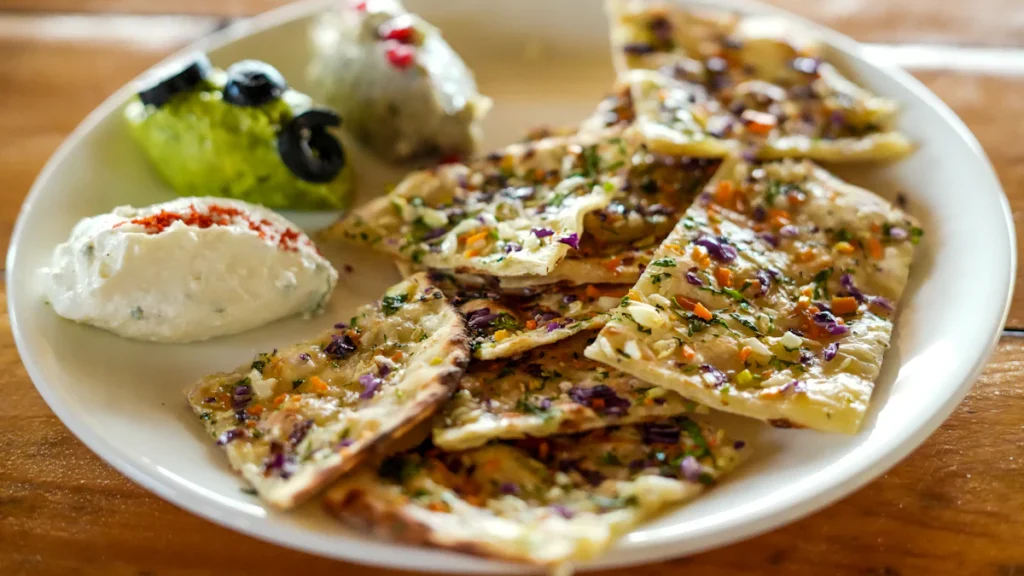
Several plates on Dubki’s menu borrow from the eastern Mediterranean, and they come with a cast of dips that are easy to mix up. This guide covers tzatziki, hummus, muhammara, baba ganoush and za’atar: what each one is made from, where it comes from, how it tastes, and where it turns up at Dubki. If you have ever wondered why one dip is white, one beige and one brick red, this is for you.
Quick answer: Tzatziki is a Greek yoghurt dip with cucumber, garlic and herbs. Hummus is a Levantine purée of chickpeas, tahini, lemon and garlic. Muhammara is a Syrian red pepper and walnut dip from Aleppo, sweetened with pomegranate molasses. Baba ganoush is smoky roasted aubergine mashed with tahini. Za’atar is a herb and sesame seasoning, not a dip. At Dubki, three of the dips appear together in the Grilled Mediterranean Poiee Sandwich.
The five at a glance
| Name | Region | Base | Flavour | Vegan? |
|---|---|---|---|---|
| Tzatziki | Greece (similar dips in Turkey and the Balkans) | Yoghurt, cucumber, garlic | Cool, tangy, garlicky | No (dairy) |
| Hummus | Levant | Chickpeas, tahini, lemon | Nutty, creamy, mellow | Usually yes |
| Muhammara | Aleppo, Syria | Red peppers, walnuts, pomegranate molasses | Sweet, smoky, gently hot | Usually yes |
| Baba ganoush | Levant | Roasted aubergine, tahini | Smoky, silky | Usually yes |
| Za’atar | Levant | Dried herbs, sumac, sesame | Herbal, lemony, toasty | Yes |
“Usually” is doing real work in that last column: restaurants sometimes add yoghurt or butter, so if you are vegan, ask.
Tzatziki
Tzatziki is made from strained yoghurt, grated cucumber (squeezed dry so the dip does not go watery), garlic, olive oil, and dill or mint, with a little lemon or vinegar. It is the cooling element in Greek grills and gyros. Close relatives include Turkish cacık and, closer to home, Indian raita, which is why tzatziki feels familiar to many Indian diners.
Hummus
Hummus means “chickpeas” in Arabic. Cooked chickpeas are blended with tahini (sesame paste), lemon juice, garlic and salt until very smooth, then finished with olive oil and sometimes paprika or cumin. A good hummus is creamy rather than grainy, with the tahini clearly present.
Muhammara
Muhammara comes from Aleppo in northern Syria, and its name means roughly “reddened”. Roasted red peppers are pounded with walnuts, breadcrumbs, olive oil, garlic and pomegranate molasses, and seasoned with Aleppo pepper flakes and sometimes cumin. It is sweet, sour, smoky and lightly spicy all at once, and it is the dip people tend to ask about after trying it for the first time.
Baba ganoush
Aubergines are charred over a flame or under a grill until the skin blackens and the flesh collapses, then scooped out and mashed with tahini, lemon and garlic. The smoke is the point: a baba ganoush made from oven-roasted aubergine without charring tastes flat. It is close in spirit to the Indian baingan bharta, minus the onion and tomato masala.
Za’atar
Za’atar is both the name of a wild herb related to thyme and oregano and the seasoning blend made from it. The blend combines the dried herb with sumac (for a lemony sourness), toasted sesame seeds and salt. It is mixed with olive oil and spread on flatbread before baking, which is the classic manakish.
Where these appear on the Dubki menu
- Grilled Mediterranean Poiee Sandwich (₹545, veg): Goan poee bread with tzatziki, hummus, muhammara and grilled vegetables. This is the easiest way to taste three of the dips at once.
- Turkish Mutton Seekh Kebab (₹625): with sumac, cardamom, baba ganoush and sour cream.
- Joojeh Kebab (₹545): saffron chicken with za’atar bread and caramelised orange.
- Persian Kebab (₹545): tandoori chicken with pita and badernjan (a Persian word for aubergine).
- Lamb and Chorizo Burger (₹545): with aged cheddar and tzatziki.
The menu card lists these components but not the exact recipes, so we cannot say how close each is to the traditional version. Prices above are before the 10% service charge and roughly 5% GST; a ₹545 plate comes to about ₹630 all in (an estimate).
For the full rundown of the sandwich, see our Grilled Mediterranean Poiee guide, and for the grilled meats our guide to Dubki’s kebabs. The meat-free options are collected on the Dubki vegetarian menu.
How to eat mezze dips
In the eastern Mediterranean, these dips are rarely eaten alone. They arrive in small bowls as part of a spread, with warm flatbread to tear and scoop, raw vegetables, olives and pickles, and often alongside grilled meat. A few habits help you get the best out of them:
- Use bread as a spoon. Tear a piece, pinch it into a scoop and drag it through the dip.
- Mix contrasts. Cool tzatziki balances smoky meat; sweet, tangy muhammara lifts plain hummus.
- Add oil and spice. A drizzle of olive oil and a pinch of sumac or chilli on top is traditional.
- Pair with kebabs. Yoghurt and aubergine dips are natural partners for grilled lamb and chicken.
The Grilled Mediterranean Poiee Sandwich follows the same logic, layering the three dips inside the bread so each bite gets cool, nutty and smoky-sweet notes together.
FAQs
Which is the healthiest of these dips?
All can fit a balanced meal. Tzatziki is relatively light; hummus and muhammara are richer because of tahini, walnuts and oil.
Is muhammara spicy?
Mildly. Aleppo pepper gives gentle warmth rather than strong heat.
Is tzatziki the same as raita?
They are close cousins. Tzatziki is usually thicker, made with strained yoghurt, and more garlicky.
Can I order the dips on their own at Dubki?
The menu does not list them as separate items. Call +91 86238 88190 to ask.
See all 50 dishes and prices on the Dubki food menu.
Pingback: Goan Poee Bread: The Pocket Loaf of Goa's Poders - Dubki Menu