
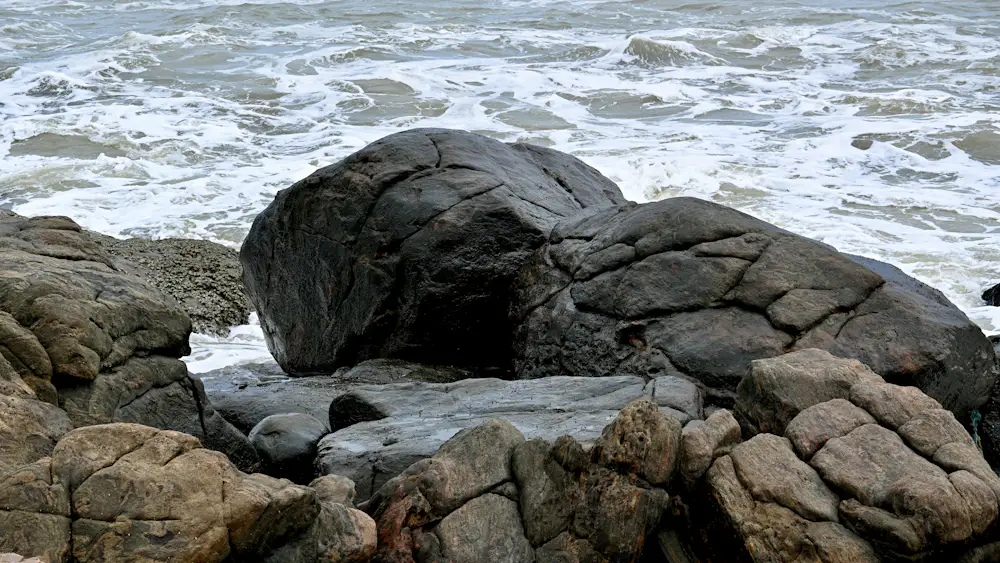
Ozran beach is the southern stretch of Vagator in North Goa, the part most locals and returning visitors simply call Little Vagator. It sits below a line of red laterite cliffs, broken into small coves by black rocks that run out into the sea. If you have only seen the main Vagator beach car park, Ozran feels like a different place: quieter in the morning, busier at sunset, and far more about the view than the sand.
Quick answer: Reach Ozran beach by heading to the Little Vagator side of Vagator and taking the steps down the cliff. Wear proper footwear, check the tide before you walk around the rocks, swim only where lifeguards are posted, and look for the Shiva face carved into a rock on the beach. Sunset is the busiest and best time.
Where exactly is Ozran beach?
Vagator has two main beach areas. The northern one, often called Big Vagator, lies below Chapora Fort and is reached from the main parking area. Ozran is to the south, under the cliffs that face Anjuna’s direction. Cafés, guesthouses and restaurants line the clifftop road above it, and most of them look straight out to the Arabian Sea, which is why the area fills up in the late afternoon.
The beach is not one long strip. Rocky outcrops split it into several smaller sections, and at high tide you may not even realise the next cove exists. That layout is part of the charm, but it also shapes how you should plan a visit.
How to get down to the beach
There is no road onto the sand. You walk down from the clifftop, using one of the stepped paths that lead from the Little Vagator side. Some are proper concrete or stone steps; others are uneven laterite paths worn smooth by years of feet. Expect a few minutes of downhill walking and the same climb back up, which feels much longer after a swim and in the midday heat.
- By scooter or car: Ride to the Little Vagator side of the village and park where it is allowed on the approach roads. Parking near the top gets tight from about 4 pm in season.
- By taxi: Ask for Little Vagator or Ozran rather than just “Vagator”, or you may be dropped at the main northern beach.
- On foot from Big Vagator: At low tide some people walk around the rocks between the two beaches. Do not try this on a rising tide.
If you are coming from further away, our guide on how to reach Vagator from the airports and stations covers the longer journey.
The Shiva face carving
The beach’s best-known landmark is a large face of Lord Shiva carved into a rock on Ozran. Local press reports credit it to an Italian devotee remembered as the “Jungle Man”, who settled here decades ago, and foreign and Indian devotees still gather at the rock to mark Mahashivratri. No reliable source gives an exact date for the carving, so treat any precise year you hear as a guess.
Finding it can take a little searching. It is on the rocks along the beach rather than on the clifftop, and its visibility depends on the tide and on how much of the shoreline is exposed. Ask a lifeguard or a shack worker for the current best route. Please treat it as a religious site: no climbing on the face, and keep clear if people are offering prayers.
What there is to do
Swim (carefully)
The water can be inviting on calm winter mornings. But rocks sit just under the surface in places, and the currents around the outcrops are unpredictable. Swim only in sections where lifeguards are on duty and follow their flags.
Watch the sunset
Ozran faces west, so the sun drops straight into the sea. In winter it sets around 6 pm; by late spring it is closer to 7 pm. Our North Goa sunset points guide has month-by-month times.
Explore the coves
Low tide opens up rock pools and the small strips of sand between outcrops. Good shoes matter more than a beach towel here.
Safety checklist
| Risk | What to do |
|---|---|
| Rising tide cutting off coves | Check tide times on a phone app before walking around rocks |
| Slippery steps and laterite | Wear sandals with grip, not smooth flip-flops; take the steps slowly after dark |
| Submerged rocks | Swim only in lifeguard zones, never dive in |
| Monsoon seas (roughly June to September) | Stay out of the water; heed warnings from the state’s lifeguard agency |
| Heat and dehydration | Carry water; the climb back up is steep |
Alcohol and night swimming are a bad combination anywhere, and especially on a rocky beach. Use a torch on the steps after sunset.
Eating above Ozran
Most people combine the beach with a meal on the cliff. Dubki, a two-level sea-facing restaurant and bar at 241/2 Ozran Beach, is one of the places along this stretch; its entrance is shared with Ivyy by the Cliff and marked by an illuminated sign. The menu is broad, from Goan-inspired small plates to dim sum and a seafood paella, with plates mostly around ₹545 before the 10% service charge and taxes. You can browse the full menu with prices or jump to the seafood dishes if you have been watching fishing boats all afternoon.
Opening hours are not confirmed in public listings, so call the restaurant on +91 86238 88190 before you set off.
FAQs
Is Ozran beach the same as Little Vagator?
Yes. Ozran and Little Vagator are two names for the southern part of Vagator beach, below the cliffs.
Is Ozran beach safe for swimming?
It can be in calm conditions and in lifeguard-patrolled sections. Rocks and currents make some areas dangerous, and you should not swim during the monsoon.
How many steps are there down to the beach?
It depends on which path you take. None is very long, but all are steep and uneven in places, so allow time for the climb back.
Can I see the Shiva face at high tide?
Access changes with the tide. Go around low tide and ask a lifeguard or shack worker for directions.
Planning food after the beach? Start with the Dubki menu and pick a table before the sunset rush.
Pingback: Sunset Points in North Goa, With Times by Month - Dubki Menu